With recruitment in Social Media
Digital citizenship can be defined as “the norms of appropriate and responsible behavior regarding technology use” (Ribble & Bailey, 2007). Based on this definition, Mesopotamia Research employs a scientific research method to create a digital sample frame. This frame focuses on digital citizens who use social media and is used to select a representative sample for conducting an opinion poll. The resulting digital sample will be adjusted by comparing demographic variables with those from a standard sample drawn from the population statistics framework.
As the number of new media users continues to grow, reflecting an increasing population of digital citizens, a significant question arises regarding the future of opinion poll research: Do the results of opinion polls conducted on digital citizen samples accurately represent the views of ordinary citizens who do not use the internet? In other words, can new media platforms serve as sample frames instead of relying on official population statistics to obtain a representative sample? The answer, as indicated by Mesopotamian techniques, is yes.
In Figure 1, we observe a significant increase in the number of Internet users over the years. This trend indicates a transformation of many ordinary citizens into digital citizens. Figure 2 shows a substantial rise in the number of social media platform users among Internet users. We plan to use these platforms as a framework for collecting samples in our survey and opinion research.
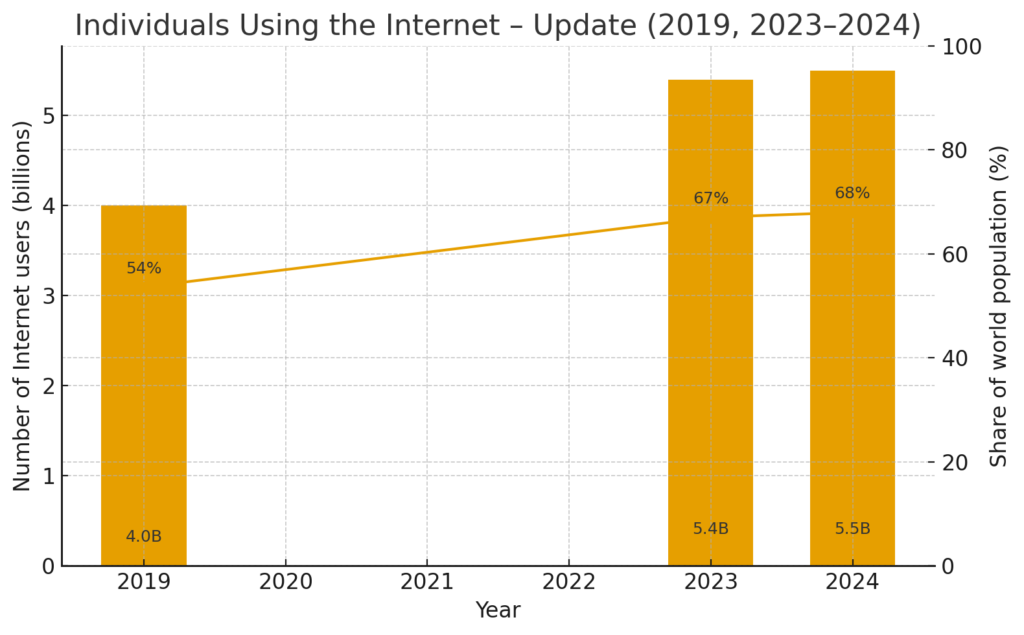
Figure 1, increase in the number of Internet users over the years
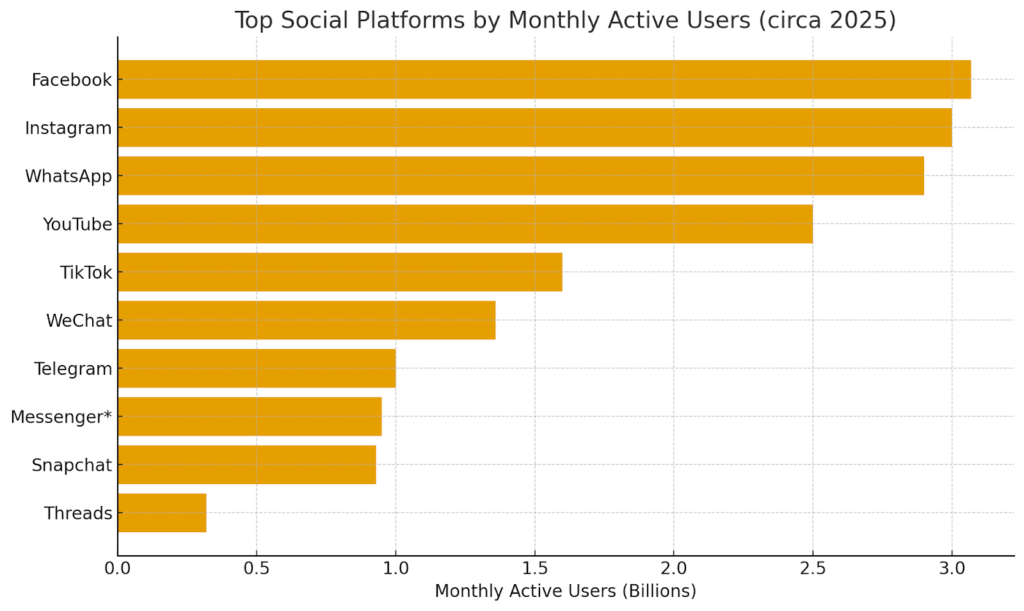
Figure 2, a significant increase in the number of Internet users over the years
| Country | Population (Jan 2025) | Internet Users (Jan 2025) | Internet Penetration (%) | Facebook Users (early 2025) | ||
| Iraq | 46.5 | 38 | 81.7 | 20.1 | ||
| Saudi Arabia | 34.3 | 33.9 | 99 | |||
| United Arab Emirates | 11.2 | 11.1 | 99 | 9.7 | ||
| Jordan | 11.6 | 10.7 | 92.5 | 5.45 | ||
| Bahrain | 1.63 | 1.61 | 99 | 0.782 | ||
Table 1, rise in the number of social media platform users among Internet users
Figure 1 shows statistics on Internet users, the population, and Facebook usage in the Middle East for the year 2019. The data reveals that the population sizes in each Middle Eastern country are nearing the number of Internet users and Facebook users. Our goal is to use Facebook as a foundation for creating a representative sample of society. This relationship between the size of the population and the number of individuals with a social media platform suggests that ordinary citizens are increasingly becoming digital citizens. The key distinction lies in the group that either does not use the internet or lacks a social media presence. This gap can be addressed by adjusting the digital sample and adding a quota sample to ensure that the digital sample aligns with the general population. This alignment can be achieved by using demographic variables as criteria for setting the quota and modifying the digital sample accordingly.
Face-to-Face Methodology
The Mesopotamia uses a cross-sectional quantitative study in Iraq with a
samples size from 1000 to 20000 depending to our client demands, and needs

encompassing the 19 Iraqi governorates of Iraq on the urban and rural level.
The target population consists of all Iraqi adults aged 18 and older who live
in households in Iraq. The sample frame utilized for this study is based on
the general Iraqi census, which is the most recent and comprehensive
official census conducted in the country. Additionally, the Iraqi Ministry of
Planning and Central Bureau of Statistics produces annual population
projections.
Sampling
According to the requirements of the client the sample will be a multistage
stratified sample that is representative of all Adult population above 19 years in
Urban and rural areas of Iraq. The frame was based on the census and
projection of the “CSO” ministry of planning.
According to the census, the administrative divisions of Iraq are as follows
Governorate (Muhafada)
Districts (Quadaa)
Municipality (Nahia)
Neighborhood (Mahala)
Avenue (Majal)
Household (Dar)
For this study, a Mahala will be considered as the primary sampling unit with
approx. 30 interviews for each Mahala ,, Mahala’s within Nahia or Quadaa will
be selected randomly
Selection of respondents from within the household
One respondent will be randomly selected from each household using the
birthday method. All non-responses will be recorded, and households will receive
three callbacks until they are registered as non-responses.
The Instrument
The instrument is a standardized Arabic and Kurdish questionnaire administered
by interviewers in face-to-face interviews with the selected respondents. The
finalization of the instrument was achieved through repeated revision and back-
translation of the draft questionnaires until a version was reached that was
satisfactory for the task at hand, taking into consideration the client’s
requirements and the region’s cultural factors.
the questions of course, must be translated to Arabic, but in the field, Classical
Arabic cannot be used with the majority of the population, and instead, the local
Iraqi dialect will be used in asking the questions this creates a problem, as when
reading classical and then asking in colloquial, the interviewer will often interpret
the questions in his own way and ask them in his own way, which creates a
discrepancy , we have solved this problem by creating a separate sheet that
contains directions on how the questions should be asked in colloquial Iraqi.
Fieldwork
And individual team will consist of the following:
Team Supervisor: The Team Supervisor is responsible for guiding and
managing the team during fieldwork. They ensure that interviewers follow
established procedures and adhere to ethical standards. The Supervisor
addresses and resolves any issues that arise in the field regarding interviewers
and their interviewees. They have authority over all team members, except for
the observer, who follows directives solely concerning safety matters. The
Supervisor is also accountable for the accuracy and validity of every interview
conducted by their team.
Interviewer: Our interviewers are skilled and experienced professionals who
have conducted numerous surveys. They will receive specialized training for this
questionnaire.
Guide: Each team will be accompanied by a designated driver who will operate a
low-profile bus or minivan. The driver must meet specific age requirements and,
like the other team members, should respect the commands and decisions of the
Team Supervisor.
Telephone Survey Methodology
Our Mesopotamia Research Company has developed a comprehensive database that includes

thousands of verified phone numbers across Iraq, each categorized by demographic and
geographic location. This enables us to conduct representative telephone surveys using stratified
or quota sampling methods. Through this system, we can collect accurate, regionally balanced
data from diverse Iraqi populations, ensuring statistical reliability and coverage across provinces,
age groups, and socio-economic categories.